Listen to the Brief Overview
Many Charlotte businesses lose money every month targeting the wrong keywords. They pay for clicks from people still researching instead of those ready to buy, or they invest months in SEO while missing customers who need their services today. The Two-List System solves this by showing you how to split keywords between PPC and SEO based on buyer intent, so every dollar works harder and no opportunity falls through the cracks.
Why Keyword Intent Matters More Than Volume
Not all keywords are created equal. Someone searching “what is HVAC” has completely different intent than someone searching “emergency AC repair Charlotte.” The first person is learning. The second person needs help immediately and will call the first qualified business they find.
Search intent determines where each keyword belongs in your marketing strategy. High-intent keywords signal readiness to buy, schedule, or contact. Low-intent keywords indicate research, comparison, or general curiosity. Understanding this distinction shapes how you allocate every marketing dollar.
Search intent: The underlying goal or purpose behind a user’s search query, revealing whether they want to learn, compare options, or make an immediate purchase.
Google recognizes these intent differences too. The search engine delivers different result types based on what users actually want. Informational searches show blog posts and guides. Commercial searches display product comparisons and reviews. Transactional searches prioritize local businesses, ads, and contact information. Your keyword strategy should mirror these patterns.
Most businesses treat all keywords the same. They write one piece of content or run one ad campaign hoping to capture everyone. This approach spreads your budget thin, reaching people who aren’t ready to buy and missing the ones who are. The Two-List System fixes this by organizing keywords based on buyer readiness.
The Two-List Keyword Framework
The Two-List System divides your keywords into three categories: Buy Now, Learn Now, and Overlap. Each category gets different treatment based on intent and competition.
Buy Now Keywords (PPC Priority)
Buy Now keywords indicate immediate intent. These searchers know what they need and are ready to take action. Examples include “hire SEO consultant Charlotte,” “emergency plumber near me,” or “buy commercial refrigerator.” Notice the action words and urgency.
These keywords belong in your PPC campaigns because timing matters. When someone needs emergency service or wants to hire someone today, you can’t wait six months for organic rankings to develop. Paid ads put you in front of ready buyers immediately.
Buy Now keywords typically include modifiers like “hire,” “buy,” “near me,” “emergency,” “best,” or specific service names. They often have commercial intent and competition from other advertisers. The cost per click runs higher because everyone recognizes their value.
Learn Now Keywords (SEO Priority)
Learn Now keywords come from people researching, comparing, or educating themselves. They’re not ready to purchase yet. Examples include “how does SEO work,” “HVAC maintenance tips,” or “choosing a marketing consultant.” These searchers want information, not a sales pitch.
These keywords belong in your content marketing and SEO strategy. You’re building authority, capturing organic traffic, and nurturing potential customers through valuable content. This approach takes time instead of money, making it a smart choice for smaller budgets.
Learn Now keywords usually include question words like “how,” “what,” “why,” or phrases like “tips for,” “guide to,” or “best practices.” Competition is often lower because most businesses focus on transactional terms. This gives smaller businesses a chance to get noticed without needing a big budget.
Overlap Keywords (Strategic Choice)
Some keywords work well for both SEO and PPC. “Charlotte SEO services” could attract someone ready to hire or someone exploring options. “Website design pricing” might come from a serious buyer or a casual researcher. These overlap keywords require strategic decisions.
Your choice depends on several factors. Budget availability matters. If you can afford to bid while building organic rankings, do both. Competition level also influences strategy. Highly competitive terms might be too expensive for sustained PPC but achievable through consistent SEO efforts.
If your site already ranks on the first page, don’t spend ad dollars there. Invest in terms where you don’t have visibility. And if you’re not ranking yet but the keyword drives sales, PPC keeps you visible while your SEO improves.
Turning Your Lists Into Strategy
Understanding the framework means nothing without application. Let’s see how a Charlotte HVAC company might use this system with a $2,000 monthly marketing budget.
Start by auditing your current keywords. List every term customers might use to find your business. Include branded terms, service names, problem descriptions, and question-based searches. Use this list as your working guide.
Next, categorize each keyword using intent signals. “AC repair Charlotte” goes in Buy Now. “How often to change air filter” goes in Learn Now. “HVAC contractor reviews Charlotte” might be Overlap depending on your rankings and budget.
For example, a Charlotte HVAC company might include “emergency AC repair,” “furnace replacement,” and “HVAC installation near me” in the Buy Now group since they drive calls and service requests. Meanwhile, “how long do AC units last” or “signs your furnace needs repair” belong in the Learn Now group as blog topics that build authority over time.
With a $2,000 monthly budget, they could allocate $1,500 to PPC targeting Buy Now keywords during peak season (May through September) and rebalance to $1,000 to ads and $1,000 for SEO content during slower months. This flexible mix maximizes ROI while staying within budget.
Start with your top “Buy Now” keywords in PPC and build content around “Learn Now” searches through your SEO strategy. As that content begins to rank, it attracts ready buyers without ads and frees up your budget for new opportunities.
Quick-Start Action Steps
Ready to implement the Two-List System? Follow these steps to organize your keyword strategy today.
- List all keywords relevant to your business, including services, problems you solve, and questions customers ask.
- Label each keyword with its primary intent: Buy Now (immediate action), Learn Now (research), or Overlap (could be either).
- Check current rankings for Overlap keywords. If you already rank on page one, treat them as Learn Now for budget purposes.
- Allocate 60-70% of your monthly budget to PPC campaigns targeting Buy Now keywords with clear commercial intent.
- Dedicate remaining budget and time to creating SEO-optimized content answering Learn Now searches.
- Set up conversion tracking to measure which keywords actually generate leads and customers instead of empty clicks.
- Review performance monthly and shift budget toward your highest-performing channels and keyword categories.
This process isn’t one-and-done. Markets change. Competition evolves. Seasonal trends shift demand. Review your lists quarterly and adjust based on performance data and business goals.
Pro Insight
Most businesses discover their assumed “best” keywords perform poorly while ignored long-tail terms drive surprising results. Let data guide your decisions, not assumptions.
Measuring What Matters
Strategy without measurement equals guesswork. Track these metrics to know whether your Two-List System is working.
For PPC campaigns targeting Buy Now keywords, monitor cost per lead (CPL) and conversion rate closely. A $50 CPL might seem expensive until you realize each lead generates $500 in revenue. Context matters more than the raw number.
Cost per lead (CPL): The total amount spent on advertising divided by the number of leads generated, showing the efficiency of your ad campaigns.
Watch assisted conversions too. Not every click converts immediately. Google Analytics shows when PPC traffic returns later through organic search or direct visits to complete the conversion. This reveals the full value of your paid campaigns beyond last-click attribution.
For SEO efforts around Learn Now keywords, track organic traffic growth, keyword rankings, and time on page. Informational content should keep visitors engaged for 2-3 minutes minimum. Lower engagement suggests your content isn’t actually answering questions or providing value.
Monitor which blog posts generate conversions even without direct commercial intent. A post about “signs you need AC repair” might educate readers while prompting calls from people who recognize those signs in their own system. This validates your content strategy and identifies topics worth expanding.
Compare channel performance quarterly. Calculate customer acquisition cost (CAC) for both PPC and SEO initiatives. Factor in your time investment for content creation against direct ad spend. Many Charlotte businesses discover their blended approach (coordinated PPC and SEO) delivers lower overall CAC than either channel alone.
Finally, track phone calls, form submissions, and appointments separately. Charlotte service businesses often see different conversion paths. Some customers call after seeing an ad. Others read three blog posts before scheduling online. Recognizing these patterns makes it easier to organize your keywords where they’ll perform best.
Small businesses don’t win by outspending competitors. They win by tracking results and adjusting based on what works. Your Two-List System improves when you know what drives results and what drains resources.
How This Fits Your Complete Marketing System
The Two-List System connects directly to your larger marketing strategy. Buy Now keywords capture immediate demand, while Learn Now content builds awareness and trust. Together, they create a complete customer journey that balances short-term results with long-term growth.
Your landing page quality determines whether Buy Now clicks convert into paying customers. Even perfectly targeted PPC campaigns fail when pages load slowly or confuse visitors about next steps. In the same way, Learn Now content succeeds only when it rests on solid SEO fundamentals such as clear site structure, quality links, and content that genuinely answers customer questions.
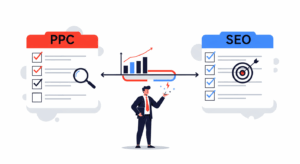
Think of PPC as the accelerator and SEO as the engine. Paid ads deliver quick wins, while SEO builds lasting visibility. The most successful Charlotte businesses use both to appear wherever their customers are, whether they’re learning, comparing or ready to buy.
Why Charlotte Businesses Need This Framework Now
Charlotte’s business landscape grows more competitive every year. More businesses invest in digital marketing. More competitors bid on the same keywords. More content competes for attention. Standing out requires smarter strategy, not just bigger budgets.
Small businesses can’t outspend enterprise competitors on every keyword. A national HVAC chain might spend $10,000 monthly on Charlotte PPC. A local company with $2,000 can’t compete everywhere. The Two-List System identifies where your limited budget creates maximum impact.
This framework also helps avoid common mistakes that drain small business marketing budgets. Paying for your own brand name when you already rank first wastes ad spend. Skipping bottom-funnel keywords because they’re costly means losing your most valuable customers. Producing content no one searches for wastes time without results. The Two-List System prevents all three.
Charlotte businesses working with Digital Marketing Charlotte consistently see better results after implementing this keyword split. A local law firm reduced their PPC spending by 40% while maintaining lead volume by eliminating keywords they already ranked for organically. A home services company doubled conversions by concentrating PPC budget on true Buy Now searches instead of spreading thin across everything.
The businesses that grow sustainably in Charlotte’s market are those that make strategic decisions about resource allocation. They understand not every keyword deserves equal investment. They recognize the different roles PPC and SEO play in customer acquisition. They measure results and adjust based on performance rather than hunches.
Your Next Step: Stop Guessing, Start Strategizing
Most Charlotte businesses approach keywords backward. They build campaigns around what they want to rank for instead of organizing strategy around buyer intent and budget reality. This creates expensive gaps where they compete against themselves or miss opportunities entirely.
The Two-List Keyword System gives you a framework for making smarter decisions with limited resources. You’re not ignoring opportunities. You’re prioritizing based on intent, urgency, and return on investment, transforming marketing from expense into predictable growth driver.
You now understand how to separate Buy Now from Learn Now keywords. You know which belong in PPC campaigns and which deserve content creation. You recognize how overlap keywords require strategic decisions based on competition and current rankings. The framework is clear.
The challenge is execution. Implementing this system requires keyword research tools, competitive analysis, conversion tracking setup, and ongoing optimization. It demands time most business owners don’t have and expertise that takes years to develop.
That’s exactly why Digital Marketing Charlotte exists. We help Charlotte businesses build coordinated PPC and SEO strategies that maximize every dollar spent. We handle the research, implementation, and optimization while you focus on running your business and serving customers.
Ready to stop spending money on the wrong keywords? Want to see exactly which searches deserve your ad budget versus your content investment? Schedule a free strategy session with Digital Marketing Charlotte today. We’ll audit your current keyword approach, identify gaps in your strategy, and show you exactly how the Two-List System can improve your marketing ROI.
Your competitors are either outspending you or overlooking key opportunities. The businesses that win Charlotte’s market make smarter decisions with the resources they have. Let’s build your keyword strategy together.